Climate finance and Africa's missing MSMEs pipeline
13 APRIL, 2026
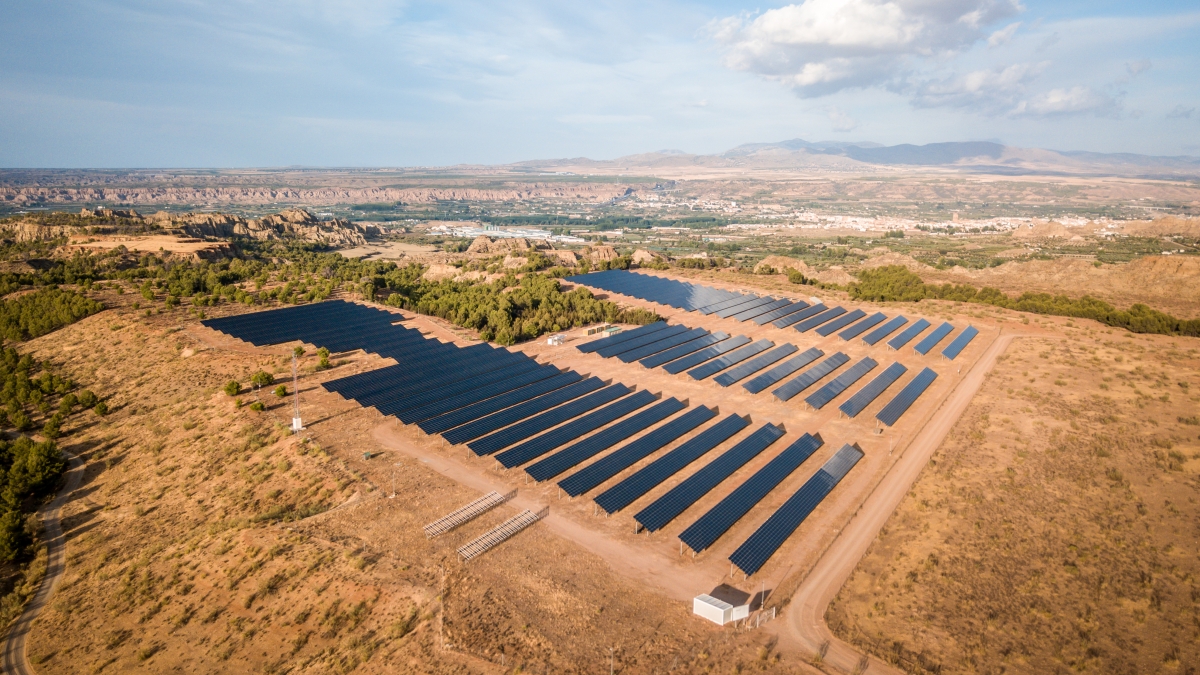
Source: Envato
Author


Across Africa, capital earmarked for climate investment sits waiting. Not for lack of ambition, and not for lack of promising enterprises. The businesses driving the continent's green transition are already operating in renewable energy, climate-smart agriculture, waste management and circular economy models. They are generating real economic opportunity and strengthening community resilience. What they are not doing is getting financed.
Banks, private investors and development finance institutions hold substantial pools of capital intended for climate-aligned investment. Developed nations have pledged to mobilize US$100 billion annually in climate finance for developing countries, channeled in part through mechanisms like the Green Climate Fund. Yet this capital consistently fails to reach the micro-, small and medium-sized enterprises (MSMEs) best positioned to deliver it. The reason is not a shortage of viable businesses. It is a financial architecture built around a fundamentally different kind of borrower.
The financing system, a mismatch for MSMEs
Many African climate MSMEs lack audited financial statements, formal governance structures and standardized reporting. This is not poor management. It is the natural condition of enterprises built to solve development problems, not to satisfy the paperwork requirements of formal lending. Without this documentation, banks struggle to verify business viability, let alone assess climate impact.
Credit-scoring models compound the problem. Most assessment tools were designed for large, established firms in mature markets. Applied to early-stage African enterprises, they consistently return low scores. But this reflects the limitations of the tools, not the potential of the businesses. Adapted frameworks that account for the realities of climate ventures at an early stage of development would tell a very different story.
The financing environment itself adds another layer of difficulty. High interest rates and rigid lending instruments are ill-suited to businesses with longer development cycles, particularly in climate-related sectors. Bank lending rates in some African markets exceed 20 to 25 percent, while microfinance rates can reach 40 to 50 percent. At these levels, even a creditworthy climate enterprise would struggle to build a viable financial model.
The result is a persistent stalemate. Financiers face growing pressure to expand climate lending. MSMEs remain structurally unable to meet the requirements that would trigger it. Capital sits idle while the businesses that could put it to work go unfunded.
Breaking the deadlock
Closing this gap requires movement on both sides. Financial institutions need to adapt their instruments. Flexible collateral structures, revenue-based financing and blended finance mechanisms are already deployed successfully by development finance institutions. There is no principled reason commercial banks cannot follow.
Credit assessment must also evolve beyond historical financial records toward models that prioritize cash-flow analysis, sector potential and measurable impact indicators. Embedding climate metrics into these frameworks would further align capital allocation with national climate strategies.
At the same time, MSMEs need structured support to meet investors where they are. Stronger governance, credible financial documentation, validated climate outcomes and well-prepared investment cases do not materialize on their own. They require deliberate investment in enterprise capacity.
This is where UNDP's PISTA (Platform for Investment Support and Technical Assistance) implemented together with the Africa Sustainable Finance Hub through the SDG Pipeline Builder x PISTA: Scaling African SMEs in Climate Resilience initiative, plays a central role. Working directly with climate-oriented MSMEs across six countries, the programme provides targeted technical assistance across the full range of enterprise capacity: financial management, business model development, growth planning, governance structures, data systems and impact measurement.
By improving both capacity and credibility, the programme rebuilds trust between entrepreneurs and investors, while facilitating direct connections between MSMEs and financiers willing to back them.
Africa's climate MSMEs are not short on ambition or innovation. What they have lacked is a financial system designed to recognize their value. The capital exists and so do the enterprises. Closing the gap between them is an infrastructure problem, and infrastructure can be changed.